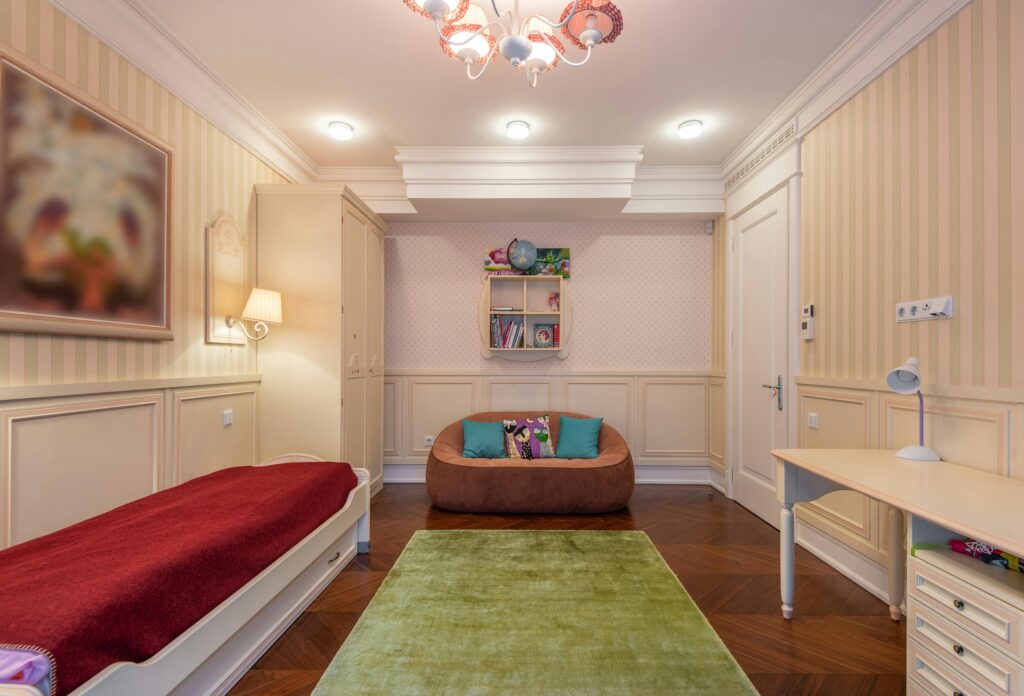
Designing a new home is one of the most exciting milestones in life. Whether it’s your first flat or a long-awaited upgrade, a well-planned interior transforms empty walls into a warm, functional, and beautiful living space. However, many homeowners struggle with questions like:
- How do I plan interiors within my budget?
- Will modular furniture really last?
- Is false ceiling necessary?
- Should I make civil changes or keep the flat as it is?
The key to a successful interior is smart planning, not overspending. A thoughtfully designed home balances functionality, ease of use, durability, and aesthetics—all without unnecessary costs.
In this blog, we’ll walk you through the four pillars of modern home interior design:
- Furniture Layout
- Modular Furniture
- False Ceiling
- Civil Modifications
Each section explains why it matters, how it improves daily life, and how to keep it budget-friendly while achieving a premium finish.
1. Furniture Layout: The Foundation of a Well-Designed Home
Why Furniture Layout Is Crucial
Furniture layout is the backbone of interior design. Even the most expensive furniture will fail if the layout is poor. A good layout ensures:
- Smooth movement inside the home
- Proper use of every square foot
- Comfort and safety for all family members
- Visually spacious interiors—even in compact flats
Smart Layout = Ease of Operation
A functional layout makes daily life effortless:
- Clear walkways (minimum 3 feet)
- Easy access to wardrobes, kitchen cabinets, and appliances
- Proper door swing planning
- No obstruction to windows or balconies
For example, placing a sofa without blocking natural light instantly improves comfort and reduces dependency on artificial lighting.
Budget-Friendly Layout Planning
A smart layout helps reduce costs by:
- Avoiding unnecessary furniture pieces
- Minimizing custom carpentry
- Reducing rework and wastage
- Making standard modular sizes fit perfectly
Instead of filling rooms with furniture, designers focus on purpose-driven placement—only what is required, where it is required.
Premium Finish Through Planning
A well-planned layout:
- Makes small homes look larger
- Enhances symmetry and balance
- Highlights décor and lighting
- Creates a clutter-free appearance
💡 Pro Tip: Good layout planning costs nothing extra but saves thousands later.
2. Modular Furniture: Smart, Stylish & Long-Lasting
What Is Modular Furniture?
Modular furniture is factory-made furniture designed in standard units, customized to fit your home. Examples include:
- Modular kitchen
- Wardrobes
- TV units
- Beds with storage
- Study units
Why Modular Furniture Is Ideal for New Homes
Modern homeowners prefer modular furniture because it offers:
- Faster installation
- Consistent quality
- Clean factory finish
- Better durability
- Future flexibility
Ease of Operation in Daily Life
Modular systems are designed for comfort:
- Soft-close drawers and shutters
- Smooth sliding wardrobes
- Ergonomic heights for kitchen platforms
- Easy-to-clean surfaces
- Organized storage zones
This makes daily tasks effortless—especially for senior citizens and children.
Budget-Friendly Advantages
Contrary to popular belief, modular furniture can be more economical than traditional carpentry:
- Controlled factory pricing
- Minimal material wastage
- Reduced labour costs
- Faster completion (time = money saved)
You can also choose:
- Laminates instead of veneers
- Pre-engineered boards instead of solid wood
- Standard accessories instead of premium imports
Premium Look Without Overspending
Modern laminates, finishes, and hardware give a luxurious appearance:
- Matte and textured finishes
- Handle-less designs
- Sleek color combinations
- Uniform edges and alignment
With the right design, modular furniture delivers a hotel-like finish at residential budgets.
3. False Ceiling: More Than Just Decoration
Is False Ceiling Really Necessary?
False ceiling is not just about looks—it plays a functional role in modern homes.
Benefits of False Ceiling
- Conceals wiring, AC ducts, and pipes
- Improves lighting distribution
- Enhances room proportions
- Improves acoustics
- Adds thermal insulation
Ease of Operation & Maintenance
Modern false ceilings are designed for:
- Easy access panels for maintenance
- Long-life LED lighting
- Minimal dust accumulation
- Durable materials like gypsum
Once installed properly, they require very low maintenance.
Budget-Friendly False Ceiling Design
You don’t need heavy designs everywhere. Smart planning includes:
- False ceiling only in living and master bedroom
- Simple cove lighting instead of heavy layers
- Minimal POP work
- Energy-efficient LED fixtures
This keeps costs under control while achieving a refined look.
Premium Finish with Minimal Design
Sometimes, less is more:
- Clean straight lines
- Warm indirect lighting
- Neutral color palette
- Symmetrical design
A simple false ceiling can instantly uplift the entire home without shouting for attention.
4. Civil Modifications: Thoughtful Changes for Long-Term Comfort
What Are Civil Modifications?
Civil modifications include:
- Wall removal or addition
- Door and window repositioning
- Kitchen or bathroom layout changes
- Electrical and plumbing alterations
Should You Do Civil Changes?
Civil work should be purpose-driven, not cosmetic. Right modifications can:
- Improve space utilization
- Enhance ventilation and light
- Increase storage
- Improve furniture placement
Wrong or unnecessary changes can increase cost and delay the project.
Ease of Living Through Smart Modifications
Examples of functional civil changes:
- Opening kitchen wall for better interaction
- Creating niche storage spaces
- Aligning doors with furniture layout
- Adjusting switch positions for easy reach
These changes improve daily comfort for years to come.
Budget-Friendly Civil Planning
Cost control strategies include:
- Minimal demolition
- Retaining existing plumbing lines
- Using dry partitions instead of brick walls
- Coordinating civil work with furniture planning
Early planning avoids expensive rework later.
Premium Results with Minimal Intervention
Even small changes can create big impact:
- Enlarged doorway for visual openness
- Aligned wall for a full-height wardrobe
- Recessed niches for décor
The goal is maximum impact with minimum disruption.
Bringing It All Together: A Holistic Interior Approach
A truly successful home interior is not about individual elements—it’s about how everything works together:
- Furniture layout guides movement
- Modular furniture ensures functionality
- False ceiling enhances ambience
- Civil changes support the overall plan
When planned together, these elements deliver:
- Ease of operation
- Budget discipline
- Timely execution
- Long-lasting quality
- Elegant, clutter-free spaces
Final Thoughts: Design Smart, Live Better
Interior design is not a luxury—it’s a long-term investment in comfort, functionality, and happiness. A thoughtfully designed home:
- Makes everyday life easier
- Reflects your personality
- Stays relevant for years
- Remains within budget
The secret lies in expert planning, honest budgeting, and integrated execution.
If you’re designing a new home, remember:
👉 Good design is not about spending more—it’s about spending wisely.